
THE HAGUE: THE CITY THAT DOESN’T SHOUT — AND IS ALL THE MORE POWERFUL FOR IT
My name is Tatiana. I’m a private guide in the Netherlands and Belgium, and if I need to name one city that surprises my clients the most — it’s The Hague Tour of Royal The Hague.
Not Amsterdam. The Hague. Amsterdam they expect. They’re ready for the canals, the bicycles, the tourist crowds. But The Hague catches everyone off guard. This city doesn’t announce itself. It simply exists — substantial, self-assured, layered with so much meaning that a single day barely scratches the surface. The Hague is the seat of the Dutch government and international law. The parliament meets here. The royal family lives here. The International Court of Justice — the body that decides between nations — is based here. And at the same time, one of the greatest art museums in the world stands here, where a girl with a pearl earring has been looking at us for 360 years. I show The Hague the way people who live here see it. Not a tourist itinerary — a living city.

THE MAURITSHUIS: “THE JEWEL BOX”
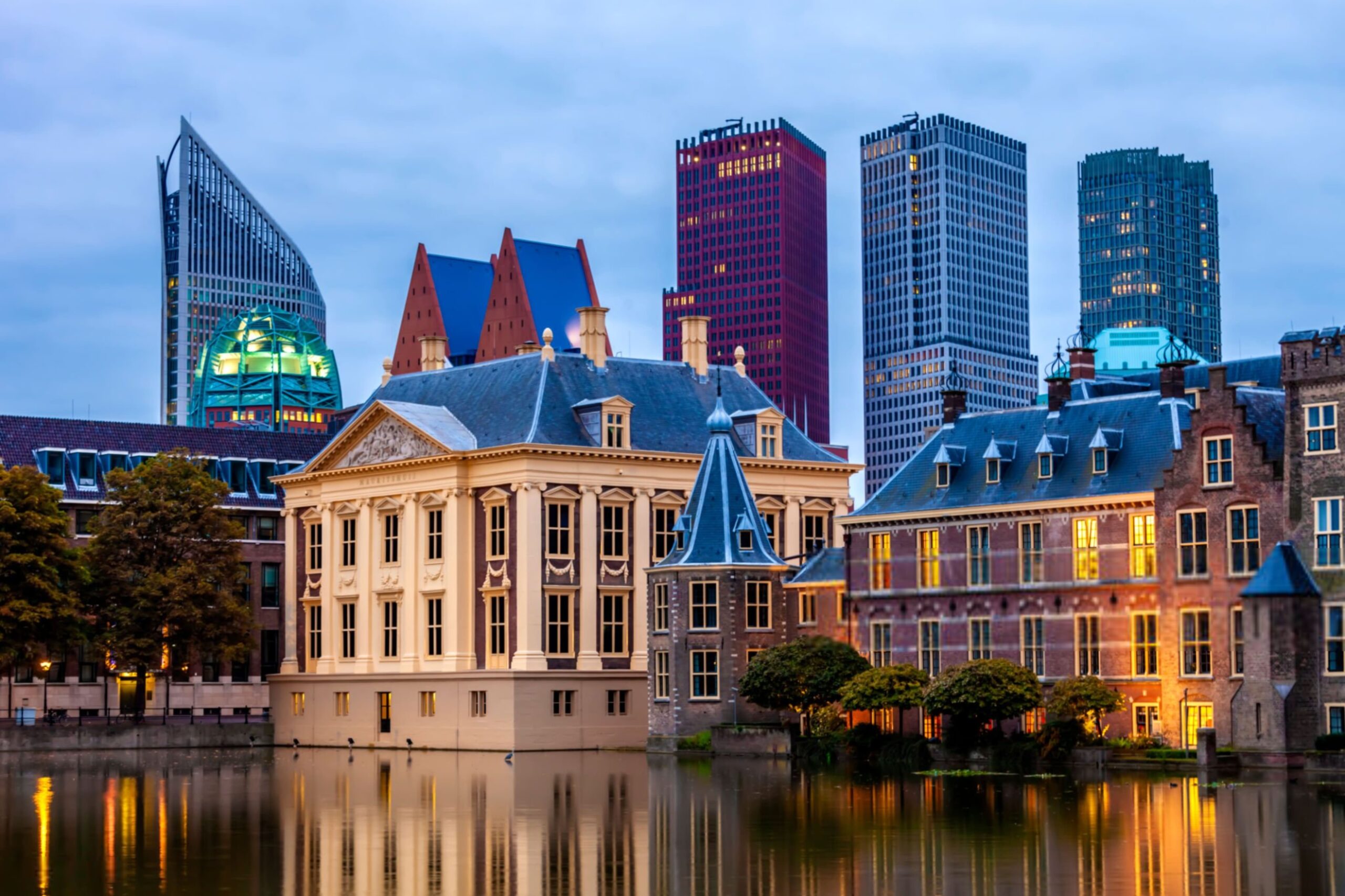
The Mauritshuis is an art museum in The Hague housing the Royal Cabinet of Paintings, which consists of 854 objects, mostly Dutch Golden Age paintings. The
collection contains works by Johannes Vermeer, Rembrandt van Rijn, Jan Steen, Paulus Potter, Frans Hals, Jacob van Ruisdael, Hans Holbein the Younger, and
others. The building was originally built around 1633–44 as a residence for John Maurice, who was then the governor of the Dutch colony in Brazil. It was designed by Jacob van Campen in the Dutch classical style. The quaint boxy shape of the building and the “gems” inside eventually led to the Mauritshuis’s nickname: “the jewel box.”

I always bring my clients here without queuing — with timed tickets booked in advance. Inside: six or seven intimate rooms, each filled with masterpieces that
make people stop and go quiet. The paintings I always talk about: “Girl with a Pearl Earring” — Johannes Vermeer, c. 1665. People travel to The
Hague from all over the world to see Johannes Vermeer’s Girl with a Pearl Earring in the flesh. We don’t know why exactly she’s so famous. We do have some theories, but we can’t explain it entirely. And maybe we don’t really want to — a little mystery suits the Girl. According to the museum, this is not a portrait but a
“tronie” — a painting of an imaginary figure. She looks over her shoulder — alluring and innocent at once. Who is she? Nobody knows. That mystery has existed
for 360 years, and it’s exactly what makes her impossible to look away from. “The Anatomy Lesson of Dr Nicolaes Tulp” — Rembrandt, 1632. Rembrandt was around 25 when he left his hometown of Leiden and moved to Amsterdam. The Anatomy Lesson of Dr Nicolaes Tulp was the first public commission he received there: a group portrait to mark the annual anatomy lesson given by the guild of surgeons. The virtuoso painting became the young painter’s business card in Amsterdam. It’s much larger than you expect — and much more powerful. “The Goldfinch” — Carel Fabritius, 1654. The little bird that Carel Fabritius painted in 1654 has flown around the world. A tiny painting — just 33╫23 centimetres.

Fabritius died the same year in a gunpowder explosion in Delft. This painting is almost everything he left behind. “View of Delft” — Vermeer, c. 1660–1661. This is the most famous cityscape of the Dutch Golden Age. The interplay of light and shade, the impressive cloudy sky and the subtle reflections in the water make this painting an absolute masterpiece. When you then go to Delft and stand on the same bank — you recognise the city immediately. After 360 years, almost nothing has changed. “The Bull” — Paulus Potter, 1647. What makes The Bull so special is the fact that Potter painted something as ordinary as a bull on such a grand scale — the painting is almost 3.5 metres wide. Despite this large size, he paid great attention to the smallest details, such as the lark in the sky, the sunshine on the meadow, the flies on the bull’s back and the cow’s whiskers.
THE BINNENHOF, THE PEACE PALACE AND THE ROYAL FAMILY

The Hague is not only museums. It’s a city where power lives. The Binnenhof — a Gothic complex from the 13th century in the city centre, where the Dutch parliament meets. One of the oldest functioning parliamentary buildings in the world. Outside: medieval towers and the mirror-like Hofvijver pond where
swans drift. Inside: seven hundred years of Dutch history. The Peace Palace (Vredespaleis) — one of the most recognisable buildings in the world. Built in 1913 with funds from Andrew Carnegie. Today it houses the International Court of Justice and the Permanent Court of Arbitration. This is where disputes between nations are decided. The facade is extraordinary.

Noordeinde Palace — the working residence of King Willem-Alexander of the Netherlands. A few minutes’ walk from the Mauritshuis. The exterior is always
visible, and sometimes you can see the changing of the guard. The Louwman Museum — the largest private car collection in the world: more than 230 unique vehicles from 1886 to the present. Karl Benz’s first automobile. Rolls- Royces, Bugattis, Ferraris. For those who love engineering and design — a separate universe entirely. Scheveningen — The Hague’s seaside district, 10 minutes by tram from the centre. Long beach, old pier, fresh seafood, and the best herring in the city.
GOUDA: THE CITY WHOSE NAME THE WHOLE WORLD KNOWS

Gouda is 20 minutes from The Hague. A small, distinctly Dutch city with one of the largest Gothic churches in the Netherlands and the most beautiful town hall in the country in the Flamboyant Gothic style. But the main attraction is the cheese market. The Gouda cheese market runs every Thursday from mid-April through August. Porters in white costumes and guild hats of different colours carry enormous yellow cheese wheels on wooden carriers. Trade is conducted with a slap of palm against palm — “handslag.” Then: weighing on antique scales. A living tradition more than 400 years old. I never go to Gouda without stopping at a cheese stall: tasting young and aged Gouda side by side and watching people’s faces. It’s always the same reaction: surprise first, then — “could I try another piece?”
DELFT: VERMEER, DELFTWARE AND WILLIAM OF ORANGE

Delft is 15 minutes from The Hague. One of the most beautiful cities in the Netherlands — and one of the richest in history. Vermeer was born here and spent his entire short life in this city. William of Orange — the founder of the Dutch state — was assassinated here (the bullet is still in the wall of the Prinsenhof). The famous Delftware is still produced here at the only authentic factory, De Koninklijke Porceleyne Fles, founded in 1653. I show Delft not as a list of sights but as a living story: about people, passions, assassinations and paintings. About why a small Dutchman who never travelled far from his hometown became one of the greatest painters in history.
LEIDEN: REMBRANDT’S CITY AND THE OLDEST UNIVERSITY
Leiden is 20 minutes from The Hague. Rembrandt van Rijn was born here in 1606. The oldest university in the Netherlands is here — founded in 1575 as a reward to the city for its heroic resistance to the Spanish siege. Leiden is a university city: young, lively, with excellent cafés and small museums. The National Museum of Antiquities has Egyptian mummies and Greek sculptures. The Rembrandt Museum is in his childhood home. The canals are as beautiful as Amsterdam’s — without the crowds.
ROTTERDAM: THE CITY THAT THINKS DIFFERENTLY

Rotterdam is 25 minutes from The Hague. The complete opposite of everything you’ve seen before. If Amsterdam is the 17th century, Delft is quietness and ceramics, The Hague is power and art — then Rotterdam is the architecture of the future. The largest port in Europe. Piet Blom’s cubic houses. The Markthal — horseshoe-shaped with a vast fresco on its ceiling. The Erasmus Bridge — “The Swan.” Depot Boijmans — the world’s first publicly accessible museum storage facility. I often combine The Hague and Rotterdam in one day. Morning: quiet, artistic, governmental. Afternoon: modern, audacious, unexpected.
ZEELAND: A DAY TRIP FOR OYSTERS
There’s one more route I offer my most adventurous clients. Zeeland is a province in the southwest of the Netherlands where sea and land weave together in an extraordinary landscape of dykes, small islands and oyster farms. From The Hague — about an hour by car. In a day you can reach Yerseke — the capital of the Dutch oyster industry — taste fresh oysters directly on the waterfront, and be back in the city by evening. Zeeland oysters are not the oysters you find on a restaurant menu. These were taken from the water a few hours ago. The difference is the same as between a photograph of the sea and the sea itself.
HOW MY HAGUE TOUR WORKS
I collect you from your Amsterdam hotel or Schiphol Airport in a comfortable car for up to 6 passengers. Wi-Fi, water, child seats — everything is there.
The itinerary is built individually. For example:
Option 1 — The Hague + Delft: Mauritshuis, Binnenhof, Peace Palace, lunch in The Hague, Delft — Prinsenhof, Delftware factory, canals.
Option 2 — The Hague + Rotterdam: art in the morning, the architecture of tomorrow after lunch.
Option 3 — The Hague + Leiden + Gouda: university city, Rembrandt, cheese market — if it’s Thursday.
Option 4 — The Hague + Zeeland: for those who want oysters and the open sea.
Option 5 — The Hague + Brussels or Antwerp: The Hague in the morning, Belgium in the afternoon — entirely possible in one long day. Individual format only. No strangers in the car. This is your time with the people you love.
WHAT TO EAT IN AND AROUND THE HAGUE
Herring at Scheveningen — fresh, on the waterfront, with raw onion. A classic not to miss. Smoked eel — The Hague has several excellent fish restaurants and stalls. I always know where the freshest is. Dutch cheese in Gouda — young and aged side by side at the market. You’ll understand the difference permanently.
Zeeland oysters — if we go there. Nothing better exists. Indonesian rijsttafel — the Netherlands was a colonial power, and Indonesian cuisine here is part of the culture. The Hague has some of the finest Indonesian restaurants in the country: dozens of small dishes, rice, aromatic sauces.
FIVE QUESTIONS I’M ASKED MOST OFTEN
Mauritshuis or Rijksmuseum — which should I choose? Both if you have time. But if you must choose: Rijksmuseum for a broad survey of the Golden Age. Mauritshuis for deep immersion in a handful of absolute masterpieces in an intimate setting. I consider the Mauritshuis the more emotional experience — and the more personal one.
Can The Hague, Delft and Rotterdam really be combined in one day?
Yes, if we’re travelling by car and we’re not rushed at each stop. This is my favourite itinerary for a second day after Amsterdam.
What is the Peace Palace and can visitors get inside?
The Peace Palace houses the International Court of Justice. Guided tours are available but must be booked in advance. I arrange this for my clients — including
audio guide access and entry to the main halls. Is there a beach near The Hague? Yes — Scheveningen is The Hague’s own seaside district, 10 minutes by tram from
the centre. Long beach, old pier, fresh seafood, and a real seaside atmosphere. In summer, a perfect way to end a day of museums.
When is the Gouda cheese market?
Every Thursday from mid-April through August, from 10:00 to 12:30. I plan the itinerary to arrive on the right day.
SEO TITLE:
The Hague in One Day: Mauritshuis, Peace Palace & Day Trips to Delft, Rotterdam &
Gouda | Guide Tatiana
META DESCRIPTION (155 characters):
Mauritshuis, Binnenhof, Delft, Rotterdam — one day, private car for 6, no queues,
no groups. Individual tour of The Hague and surroundings with guide Tatiana.
SHORT BLOG INTRO:
The Hague is the city where the Dutch parliament meets, the king lives, and Girl with a Pearl Earring has been looking at visitors for 360 years. It’s also the
perfect base for day trips to Delft, Rotterdam, Leiden, Gouda and even Zeeland for fresh oysters. All of it by private car, with a guide, just your group — no
strangers, no rush, no compromises.
Tatiana — Private Guide, the Netherlands and Belgium
Individual tours only Comfortable car for 6 Wi-Fi Child seats Pick-up from hotel or Schiphol Airport
The Hague Delft Rotterdam Leiden Gouda Zeeland Amsterdam Antwerp