
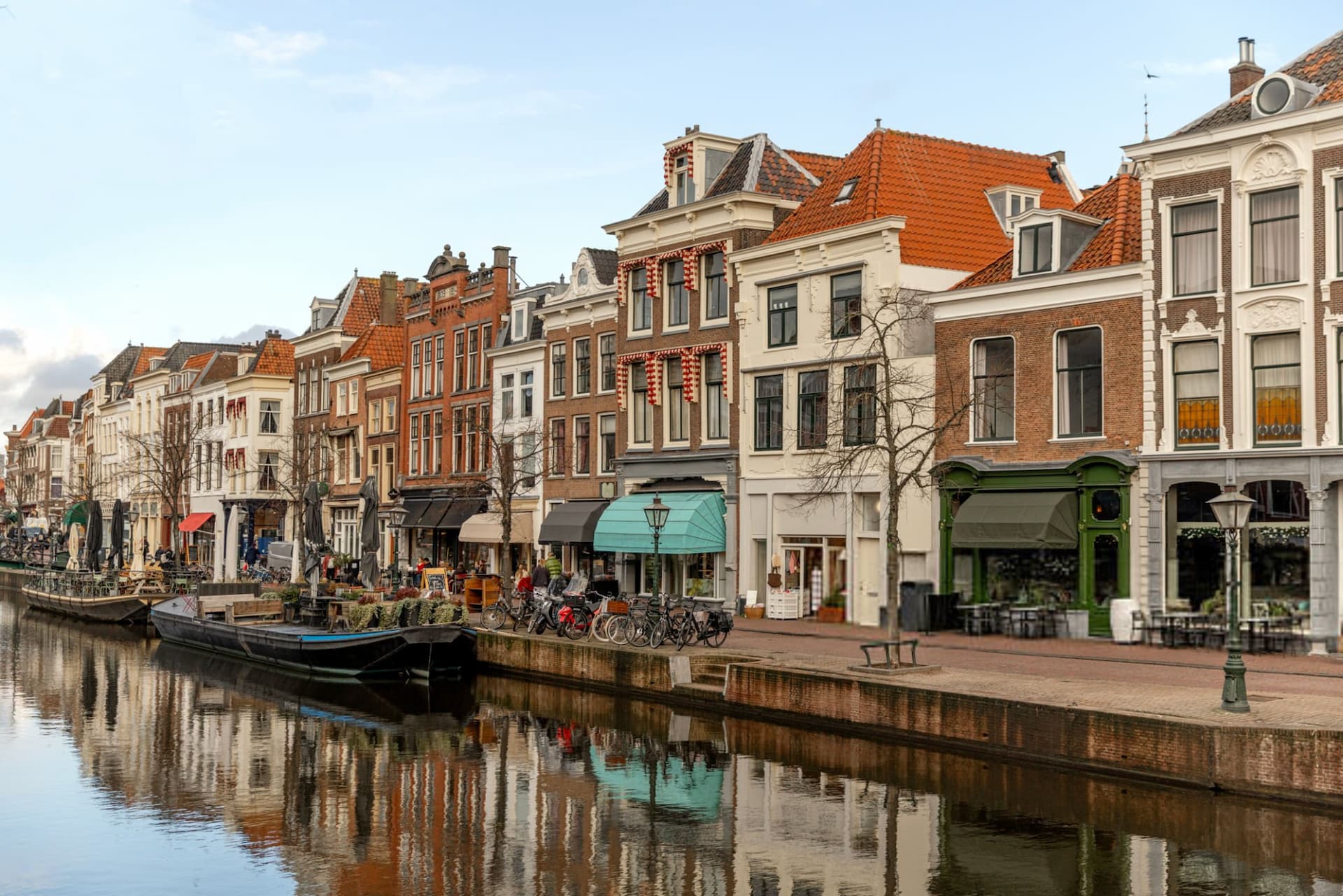
Leiden is one of those cities that may be small in size, yet incredibly rich in content. Rembrandt was born here, the Pilgrims set out from here for the New World, and the first tulip in the Netherlands was planted here — and you feel all of this not just in museums, but simply while walking through the city.
I will show you Leiden in a way that makes it truly understandable: with its main sights, a well-structured route, and the details that usually remain behind the scenes.
What to see in Leiden in one day: a city route
If you only have one day in Leiden, it’s better not to try to see everything at once, but to build your route calmly and without rushing.
- Start in the center — the Burcht, the canals, and the old streets. . This is where the city reveals itself the fastest.
- Then it makes sense to move on to places connected with Rembrandt and walk towards the university.
- After that, visit Pieterskerk and, if you feel like it, stop by the botanical garden.
- And closer to the evening, leave time for museums, quiet courtyards, and a walk along the water.
This kind of route gives you not just a checklist of places, but a complete sense of the city.
The heart of Leiden: the Burcht and its panorama
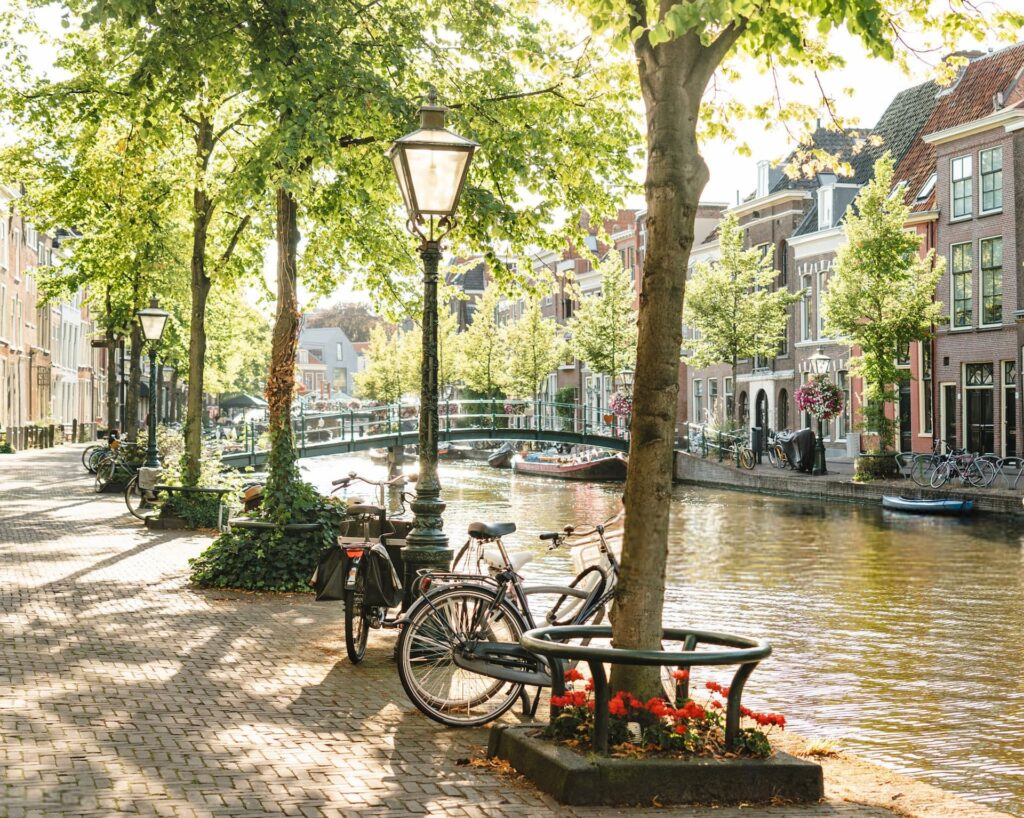
Leiden stands at the confluence of two branches of the Rhine — the Old Rhine and the New Rhine. Right here, on an artificial hill, lies the Burcht, a medieval fortress dating back to the 11th century.
In the past, people would come here in times of danger. Today, it is a park. However, it is still worth climbing up — at least for the view.
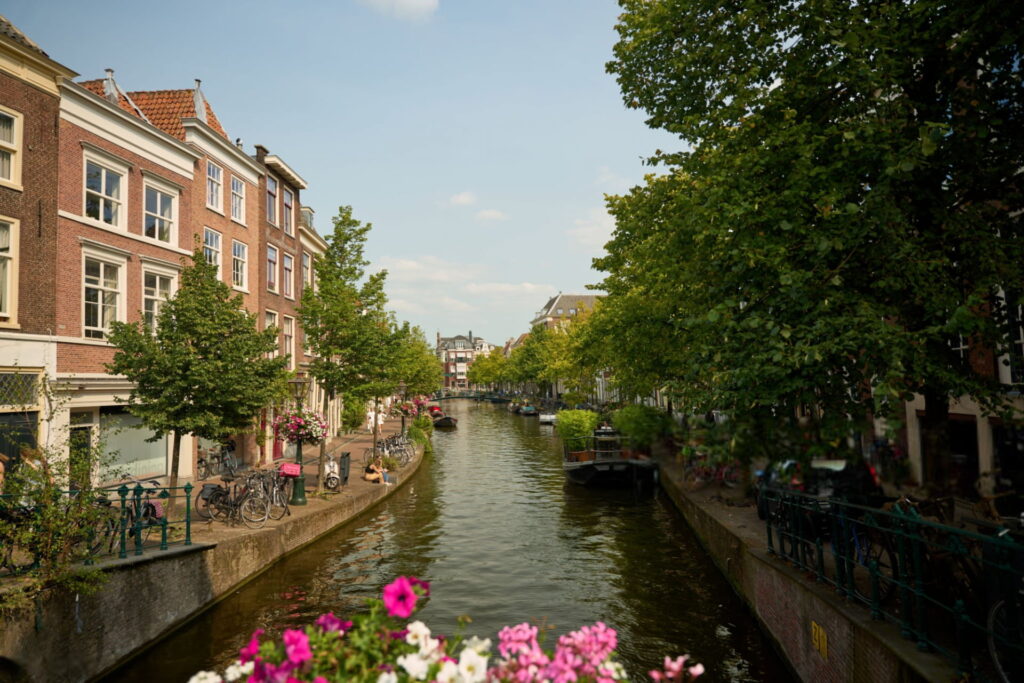
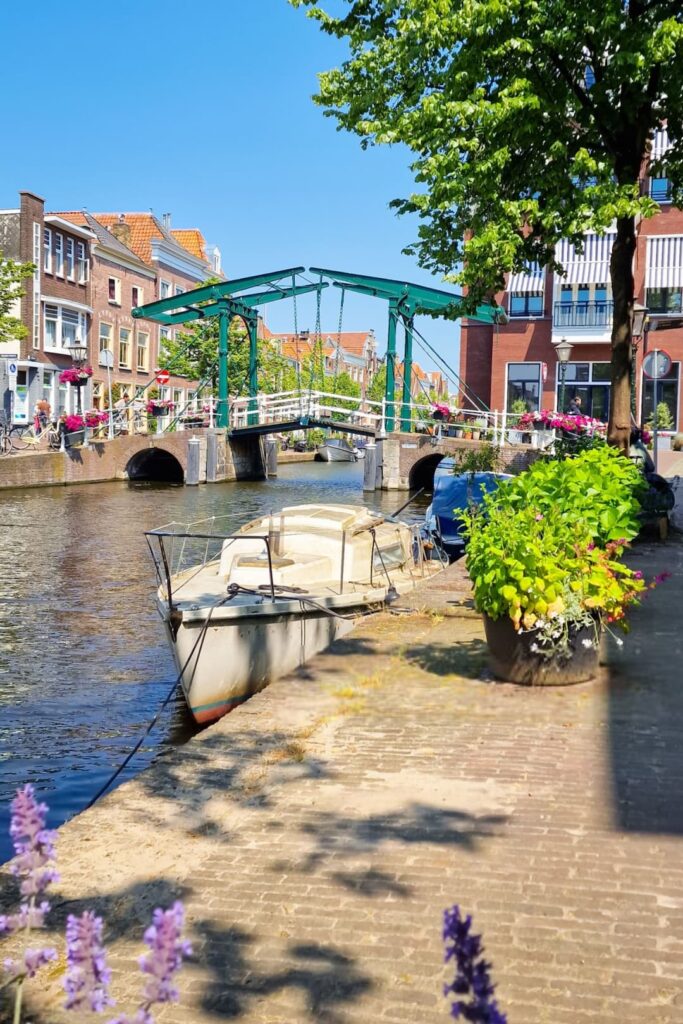
You look down and immediately understand how the city works: water everywhere, islands, bridges, life along the canals. You instantly see why it is often called a “small Amsterdam,” just without the crowds.
This is exactly where I begin my Leiden tours.
Rembrandt: Leiden gave him everything
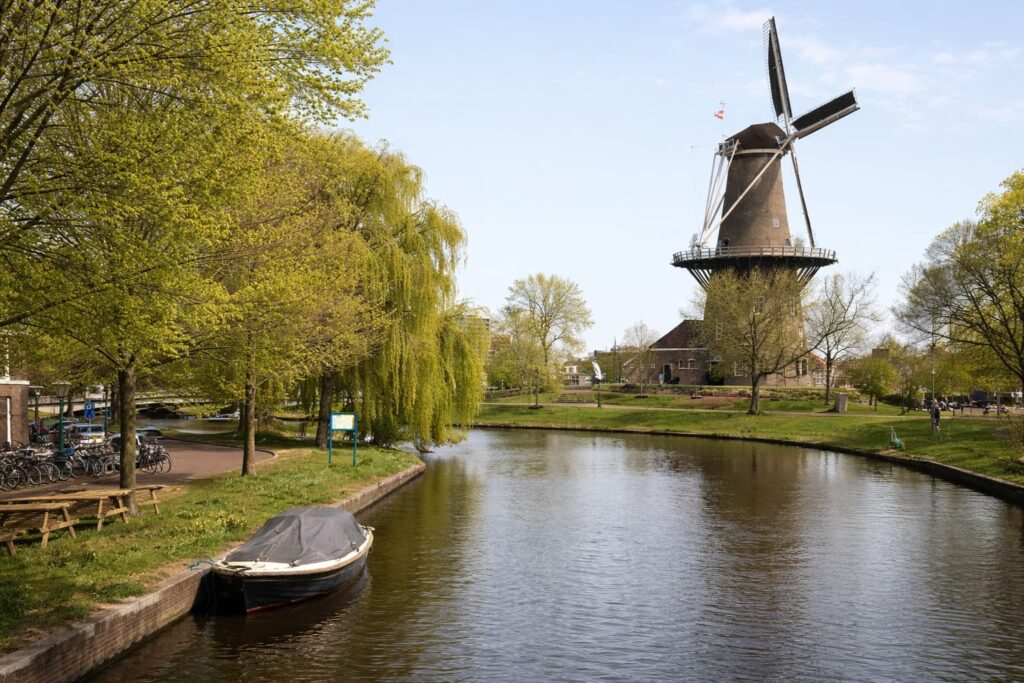
Rembrandt van Rijn was born in Leiden in 1606. His father was a miller, and one of the mills — Molen de Put — still stands by the canal, just a few steps from his birthplace.
It was in Leiden that young Rembrandt studied painting with his first teacher, Jacob van Swanenburgh. It was here that he created his first works — the very ones now held in the world’s greatest museums. He left Leiden for Amsterdam at the age of 25 and became a legend.
The city has a Rembrandt Route — a walking trail through places connected to his life. I often guide my guests along it, and here, on these very streets where he took his first steps, his story feels completely different. It is no longer just a biography, but a living, almost tangible history.
Along the way, you come across places that help you better understand his early years. For example, the Young Rembrandt Studio, open to visitors, where video mapping presents his Leiden period — briefly but very clearly.
Nearby is the Molen de Valk windmill — one of those places that captures the atmosphere of Leiden in Rembrandt’s time. It is the only surviving mill out of the 19 that once stood within the city. Today it houses a museum: you can walk through its floors and climb to the top for a panoramic view of Leiden. The mill is still operational and dates back to 1743.
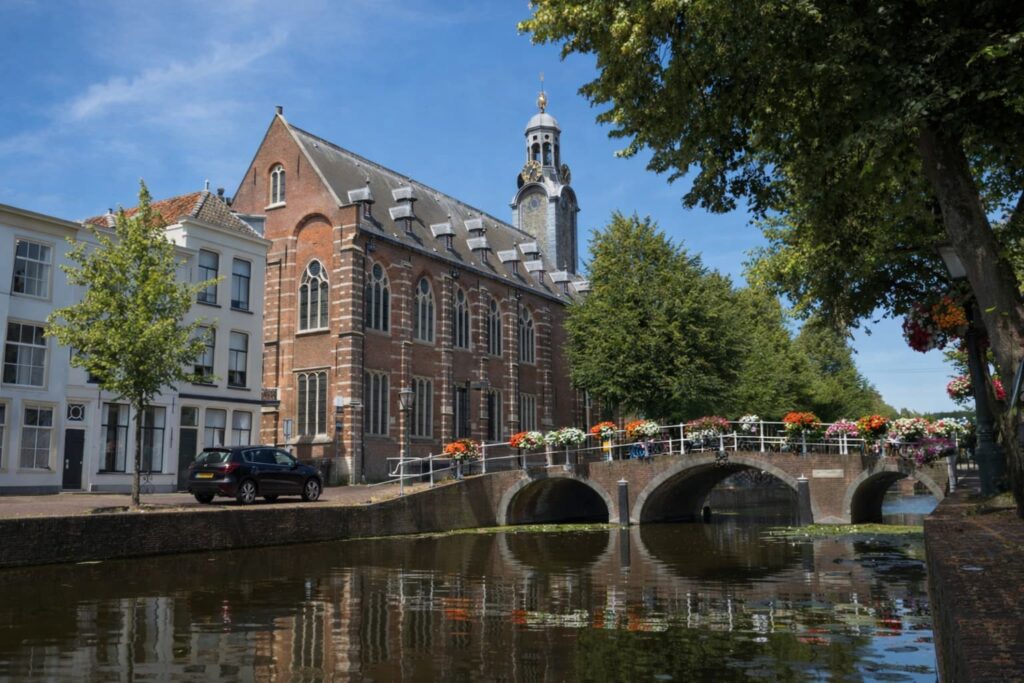
Leiden University: the oldest in the country
In 1574, the Spanish army laid siege to Leiden. The townspeople endured extreme hardship: the famine was so severe that, according to chronicles, they ate all the cats and rats, and the mayor even offered himself as food to his fellow citizens rather than surrender. This story may have grown more dramatic over time, but it captures the spirit of that period.
When the Spanish finally retreated, the rulers of Holland offered Leiden a choice: tax exemption for several years or the founding of a university. The citizens chose a university.
It opened in 1575 — the first in the Netherlands.
This decision shaped the city’s future. Leiden gradually became one of Europe’s scientific centers. Herman Boerhaave, one of the founders of modern medicine, worked here. Albert Einstein studied here. In 1633, the Leiden Observatory was established — the second oldest in the world after Bologna.
Today, around 30,000 students study at the university, and you feel it everywhere: in cafés, bookstores, streets full of bicycles, and lively canalsides.
Pieterskerk: the Pilgrims’ church
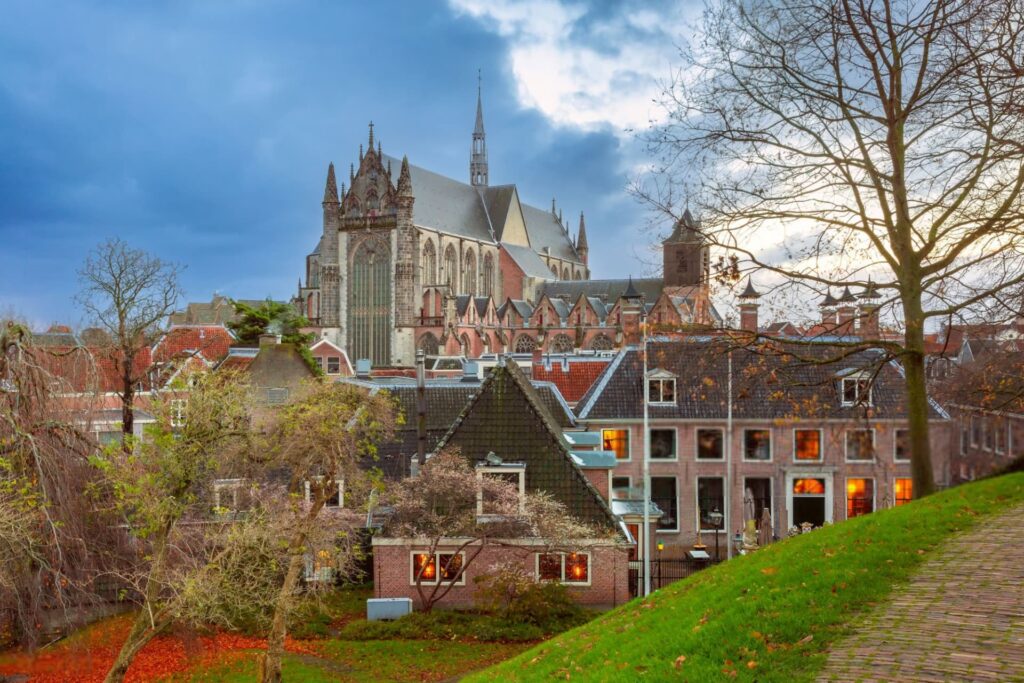
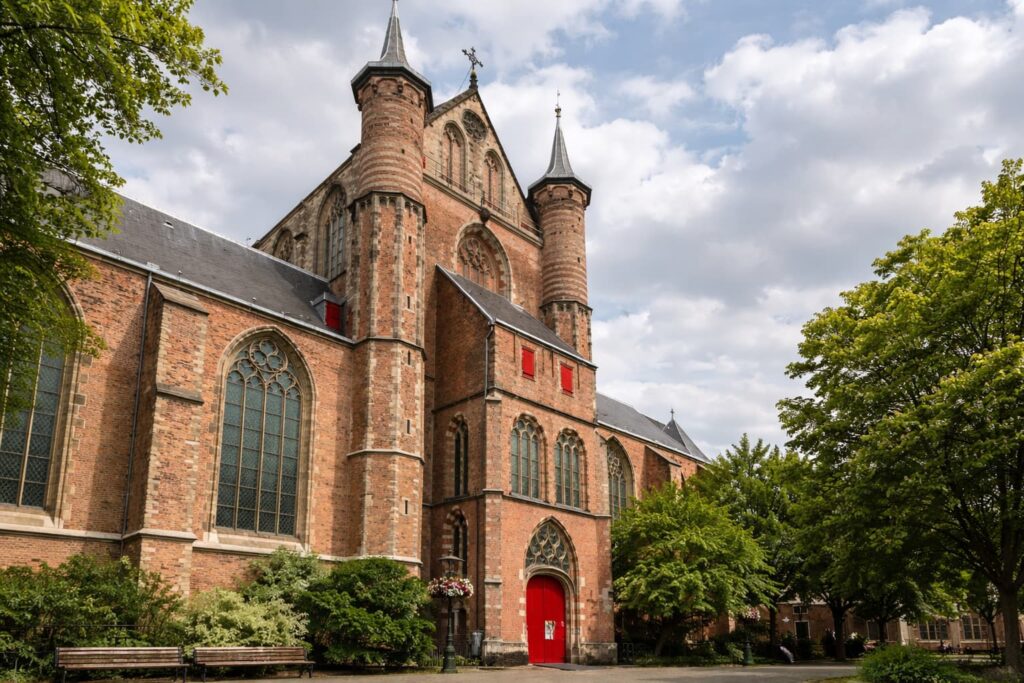
Pieterskerk is the oldest church in Leiden, nearly 900 years old. Rembrandt’s parents were married and buried here, and the young artist himself came here as well.
But for Americans, this church holds a different meaning. John Robinson, one of the key leaders of the Pilgrims, is buried here. It was from Leiden that, in 1620, a group of English religious refugees departed for the New World aboard the Mayflower. Today, more than 30 million Americans can trace their ancestry back to those 102 passengers.
Standing inside Pieterskerk, this becomes especially clear: in a sense, the history of America began here, in Leiden.
Nearby is the Leiden American Pilgrim Museum — small, but rich in content. It is housed in a 14th-century building, where you can see authentic 17th-century household items and better understand how the Pilgrims lived before their journey.
Hortus Botanicus: where the tulip arrived
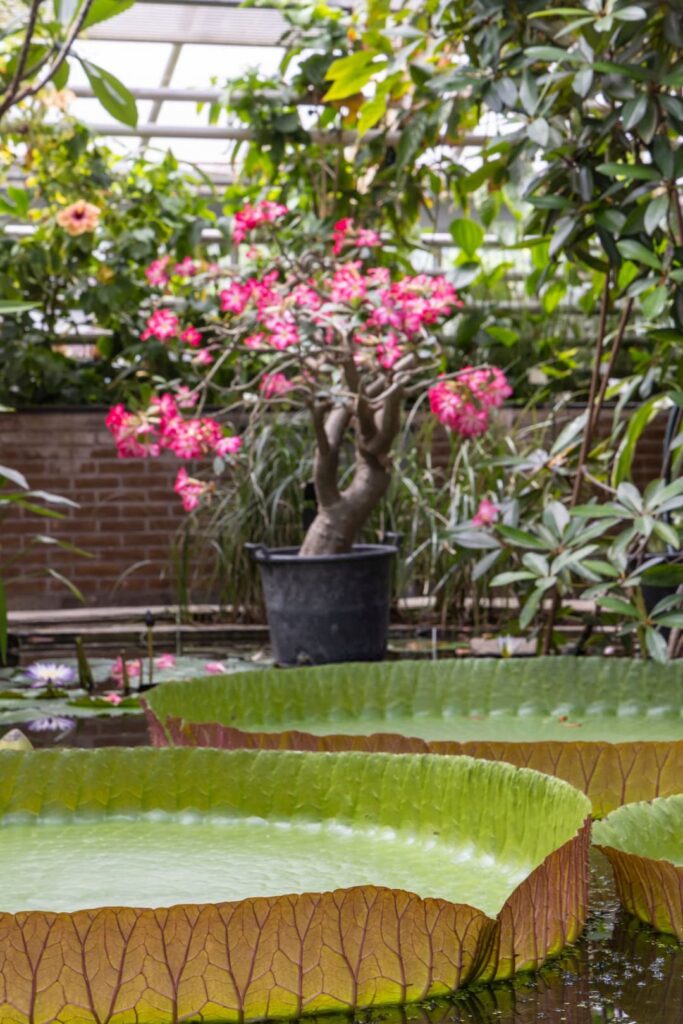
Leiden’s botanical garden was founded in 1590 and is the oldest in the Netherlands. It was here that the first tulip was planted on Dutch soil, brought from Turkey.
Tulips have long become a symbol of the country, but their story in the Netherlands begins not in Amsterdam, but here in Leiden — one of those details that makes a walk through the city even more meaningful.
Carl Linnaeus, the father of biological classification, worked at the Hortus. The garden also holds a collection of plants gathered by Philipp Franz von Siebold during his mission to Japan in the 19th century.
In spring, the garden is especially beautiful: not only tulips bloom, but many other plants as well. It is one of those places I love bringing guests to — quiet, green, and unexpectedly rich in stories, where it’s easy to slow down for a while.
Leiden’s museums: from Egypt to dinosaurs
Leiden is one of those cities where museums are truly worth planning into your route separately. They vary in theme and scale, yet each adds its own layer to understanding the city.
The Rijksmuseum van Oudheden — the National Museum of Antiquities — is one of the best of its kind in Northern Europe. Egyptian mummies, Greek sculptures, Roman artifacts — all gathered under one roof in the center of Leiden.
But the true highlight is the Temple of Taffeh — an authentic Egyptian temple from the 2nd century BC, relocated to the Netherlands in 1971 as a gesture of gratitude for help in saving Nubian monuments. It stands inside the museum in full scale — one of the most unexpected sights you can encounter in the country.
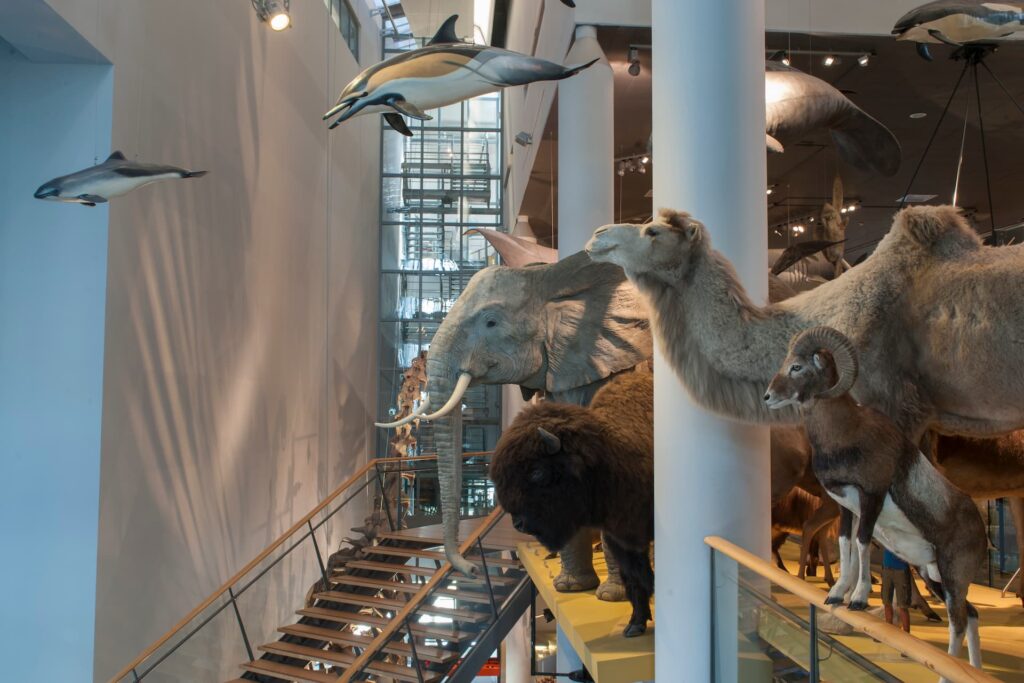
Very different in mood, but no less impressive, is the Naturalis Biodiversity Center, one of the best natural history museums in the world. It houses around 37 million specimens, from fossils to tropical birds. And a real T-Rex skeleton — one of the few in existence.
Children love this place, but in reality, adults spend hours here as well, simply because the exhibitions are truly engaging. If you are traveling with children or enjoy such museums, Naturalis is definitely worth including in your itinerary.
Hidden spots: hofjes
A Dutch phenomenon that is almost invisible from the outside. Hofjes are enclosed courtyards that once served as housing for elderly and poor residents. There are more than 30 of them in Leiden. Small, quiet, surrounded by houses from the 16th to 19th centuries — they look like scenes from a fairytale.
Most are open to visitors — you just need to know where to look. I always show at least a couple of hofjes during my tours, and they never fail to surprise. “How did we walk past and not notice?”
Poems on the walls
Here is something you won’t find anywhere else in the world: in Leiden, poems are written on the walls of houses. More than 130 poetic texts in over 30 languages — from classics to contemporary authors.
They are painted directly onto facades in large letters, impossible to miss. At some point, your walk through the city turns into not only a visual but also a literary journey.
This is the “Wall Poems” project, which began in 1992 and continues to this day. Walking through Leiden and reading poetry on its walls is a very special experience, quite unexpected for a city of this scale.
I often stop by poems in Russian and simply watch my guests’ reactions — in those moments, the city reveals itself in a completely different way.
Markets and food
On Wednesdays and Saturdays, street markets take place along the Nieuwe Rijn — flowers, cheese, herring, vegetables. Everything unfolds right by the water, creating that authentic Dutch market atmosphere without needing to go to tourist spots.
There are also local dishes tied to the city’s history. For example, hutspot — a thick stew with vegetables and meat. It was traditionally eaten by Leiden residents to celebrate the end of the Spanish siege in 1574.
The festival on October 3rd — Leiden’s Relief Day — is still celebrated today, and this dish remains an important part of it. Tasting it in Leiden is not just about food, but about literally touching the city’s history.
How to get there and what to see nearby
Leiden is very conveniently located: about 35 minutes from Amsterdam and about 15 minutes from The Hague, making it easy to include in your itinerary.
I often combine Leiden with The Hague (the Mauritshuis and “Girl with a Pearl Earring” are nearby), with Delft, or with the flower fields in season. Each combination has its own character.
What to see in Leiden: frequently asked questions
How much time do you need for Leiden?
One day is enough to see the main sights and walk through the center at a comfortable pace.
What are the must-see sights in Leiden?
The Burcht, Leiden University, Pieterskerk, Hortus Botanicus, and the city’s museums are a solid starting point.
Can you see Leiden in one day?
Yes, the city is compact, and with a well-planned route you can see all key places in a day without rushing.
Is Leiden worth visiting?
Yes, it is one of the most atmospheric cities in the Netherlands: canals, history, student life, and fewer tourists than in Amsterdam.
Leiden or Amsterdam — which is better?
If it’s your first time in the Netherlands, Amsterdam is a must. But many people end up liking Leiden more: it has the same canal and old-town atmosphere, but without the crowds. It feels calmer and more “alive,” easier to truly experience.
When is the best time to visit Leiden?
From spring to autumn for walking. In winter — if you prefer a quieter atmosphere.
Leiden Guided Tour with a Private Guide
If Leiden interests you, I can offer a private, tailor-made tour of the city, where every street holds a story. The route is customized depending on your interests and time. You can also combine Leiden with The Hague in one fully packed day.
Transport is arranged as well: a comfortable car is at your disposal.
Message me on WhatsApp to book your tour.
Tatiana, your guide in the Netherlands and Belgium 🌷
A Tour for You
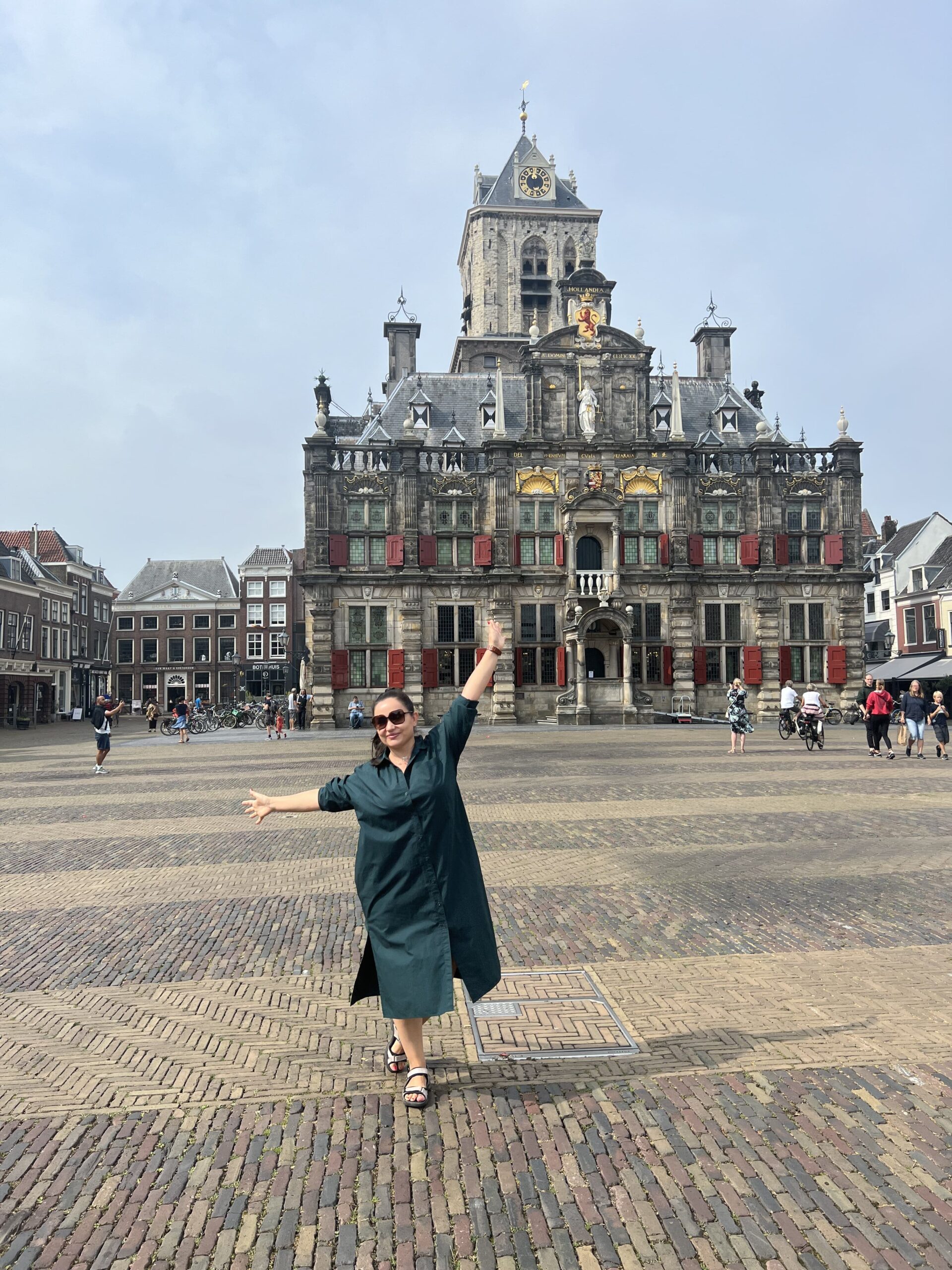
Gouda and Delft Private Tour in One Day
Discover royal secrets in Delft and taste authentic farmhouse cheese in Gouda. A 6-hour private tour through the heart of the Netherlands.
€ 550
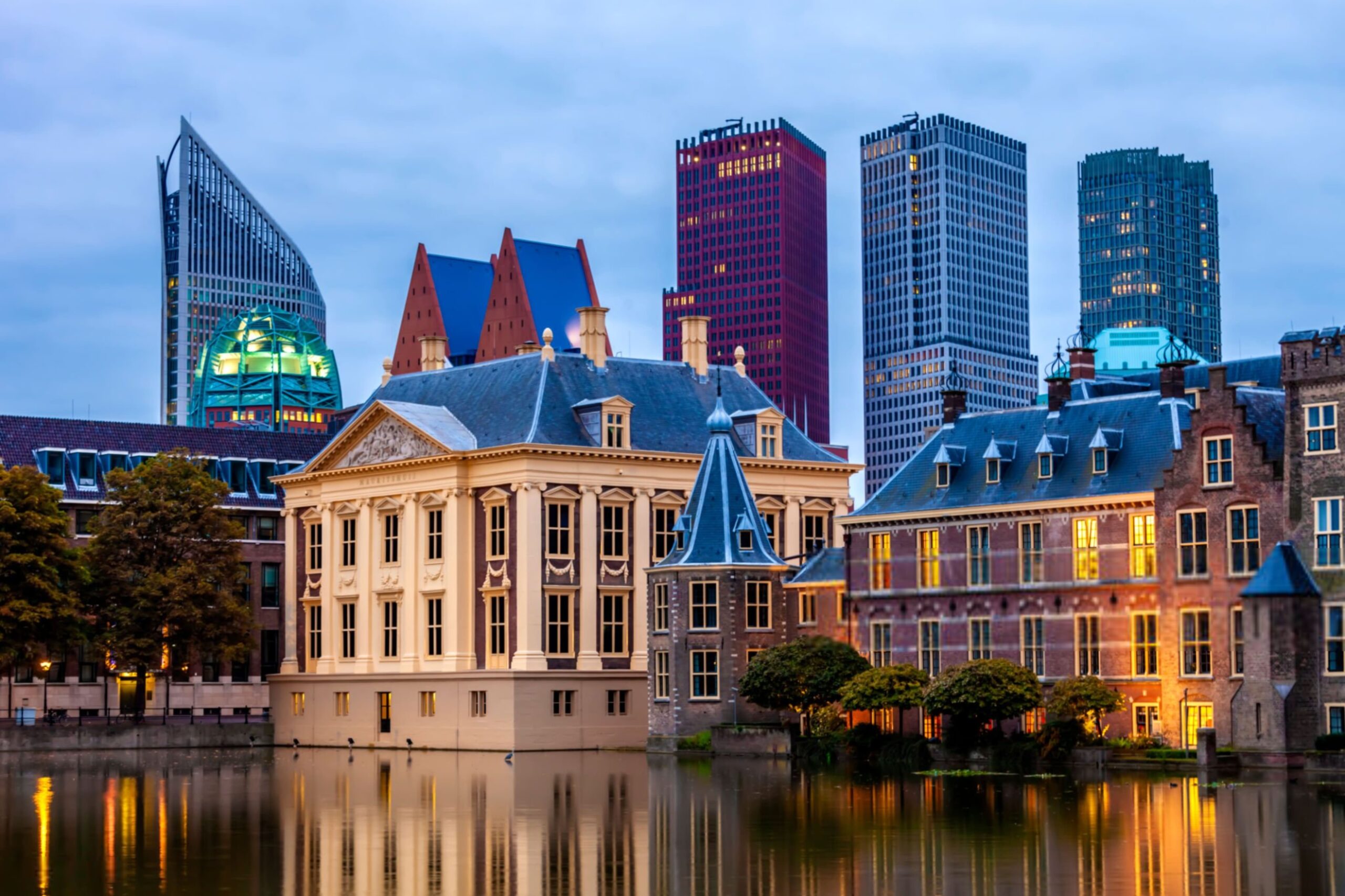
Royal The Hague Walking Tour
A 2-hour walking tour uncovering the political center of the Netherlands, royal residences, and the North Sea coast. A fully customizable itinerary adapted to your interests.
€ 230